
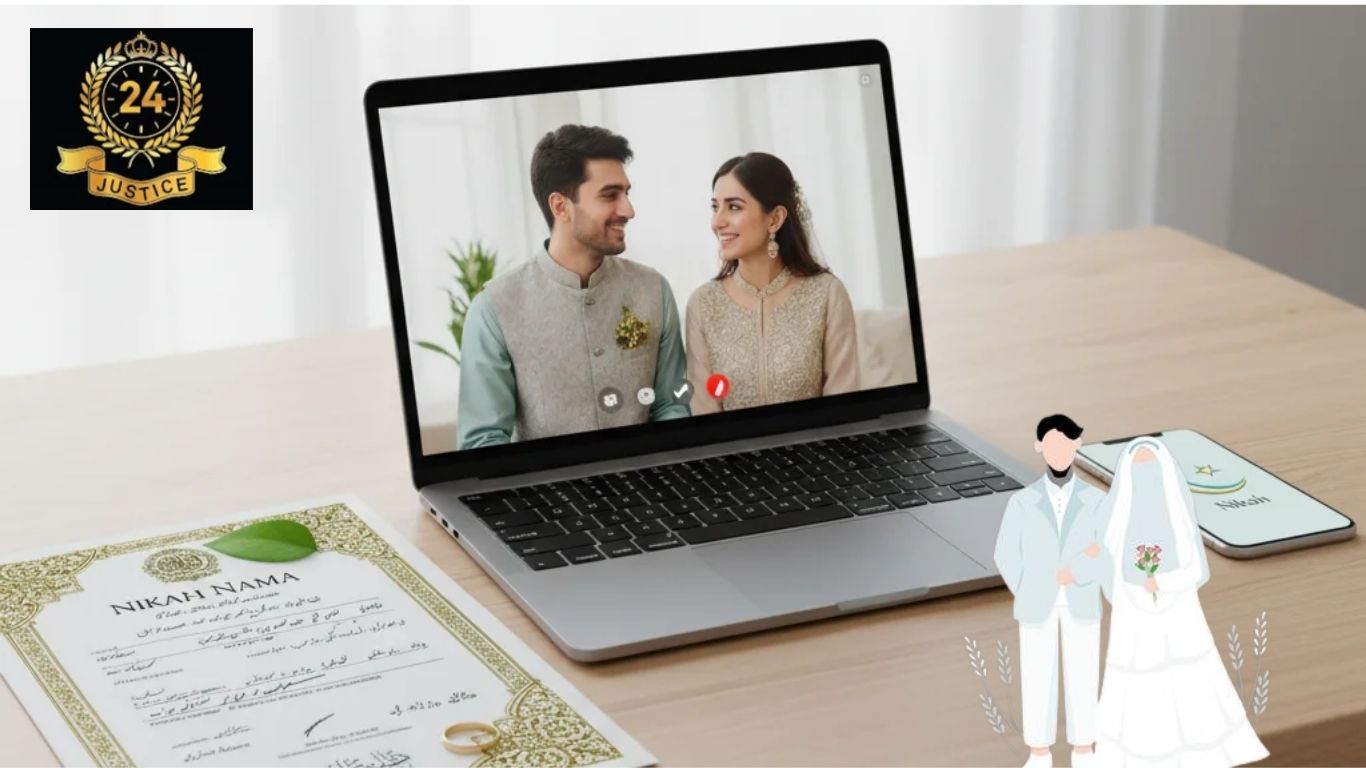
Online Nikah: A Modern Solution for Muslim Couples
Online Nikah offers a modern solution for Muslim couples. They can now solemnize their marriage while overcoming geographical, social, or logistical barriers. Digital communication tools are growing rapidly. Many people now find it convenient to conduct important life events virtually. This includes religious ceremonies. Online Nikah allows brides and grooms to participate through video conferencing platforms. This method proves especially useful for long-distance relationships. It also helps when travel becomes difficult.
What is Online Nikah?
In Islamic law, the essential requirements of Nikah include the mutual consent of both parties, the presence of witnesses, and the agreement on a Mehr (dower). Couples can fulfill these conditions in an online setting when they identify all participants clearly and maintain complete transparency. While Islamic scholars debate the validity of online Nikah, many confirm its permissibility. The marriage remains valid when couples uphold core Islamic principles and eliminate all deception or ambiguity.
Key Benefits and Accessibility of Online Nikah
One of the major advantages of online Nikah is accessibility. Couples living in different countries or regions can complete their marriage without the need for extensive travel or visa arrangements. This is particularly beneficial in today’s globalized world, where families are often spread across continents. Additionally, online Nikah can be a practical option during emergencies or restrictions, such as pandemics, when physical gatherings may not be possible.
However, online Nikah also presents certain challenges and concerns. Ensuring the authenticity of participants is crucial, as identity verification becomes more complex in a virtual environment. There is also the risk of technical issues, such as poor internet connection or misunderstandings during the ceremony. Furthermore, some families and communities may be hesitant to accept online Nikah due to cultural preferences for traditional, in-person ceremonies.
Challenges and Concerns of Online Nikah
Legal recognition is another important aspect to consider. While an online Nikah may be religiously valid, it may not always be legally recognized in certain countries unless it is properly registered with relevant authorities. Couples should ensure they comply with local marriage laws to avoid complications in the future, especially regarding documentation, inheritance, and legal rights.
Despite these challenges, online Nikah is becoming increasingly popular among younger generations who are more comfortable with digital communication. It reflects how traditions can adapt to changing times while still preserving their core values. Religious leaders and organizations are also gradually providing guidelines to ensure that online Nikah is conducted in a proper and respectful manner.
Final Thoughts of Online Nikah Balancing Tradition and Technology
Online Nikah is a practical and evolving concept that bridges tradition and technology. While it offers convenience and flexibility, it also requires careful planning to ensure religious and legal validity. Digital solutions continue reshaping modern society. Online Nikah will likely gain widespread acceptance among Muslim marriages. Couples must practice sincerity, maintain transparency, and adhere strictly to Islamic principles when conducting these virtual ceremonies.